-
Table of Contents
How Trestolone Acetato Suppresses Natural Testosterone Production
Trestolone acetato, also known as MENT, is a synthetic androgen and anabolic steroid that has gained popularity in the bodybuilding and athletic community due to its powerful effects on muscle growth and strength. However, like other anabolic steroids, trestolone acetato has been shown to suppress natural testosterone production in the body. In this article, we will explore the mechanisms behind this suppression and its potential implications for users.
The Pharmacokinetics of Trestolone Acetato
Before delving into the effects of trestolone acetato on testosterone production, it is important to understand its pharmacokinetics. Trestolone acetato has a half-life of approximately 8-12 hours, meaning it stays in the body for a relatively short amount of time. This is due to its rapid metabolism by the liver, which converts it into inactive metabolites that are then excreted through urine.
However, trestolone acetato also has a high affinity for the androgen receptor, meaning it binds strongly to this receptor and exerts its effects. This is what makes it such a potent anabolic steroid, as it can stimulate muscle growth and strength at a much lower dose compared to other steroids.
The Mechanism of Testosterone Suppression
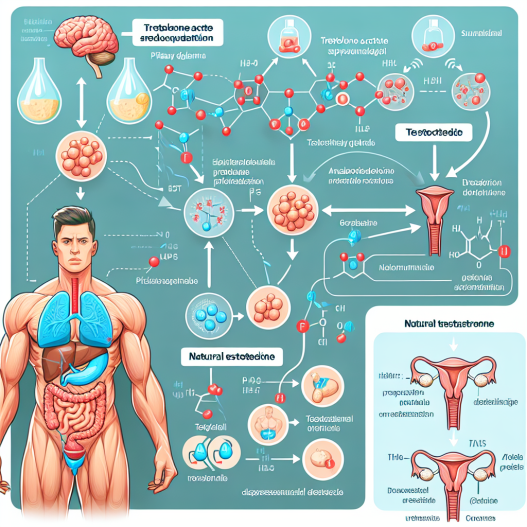
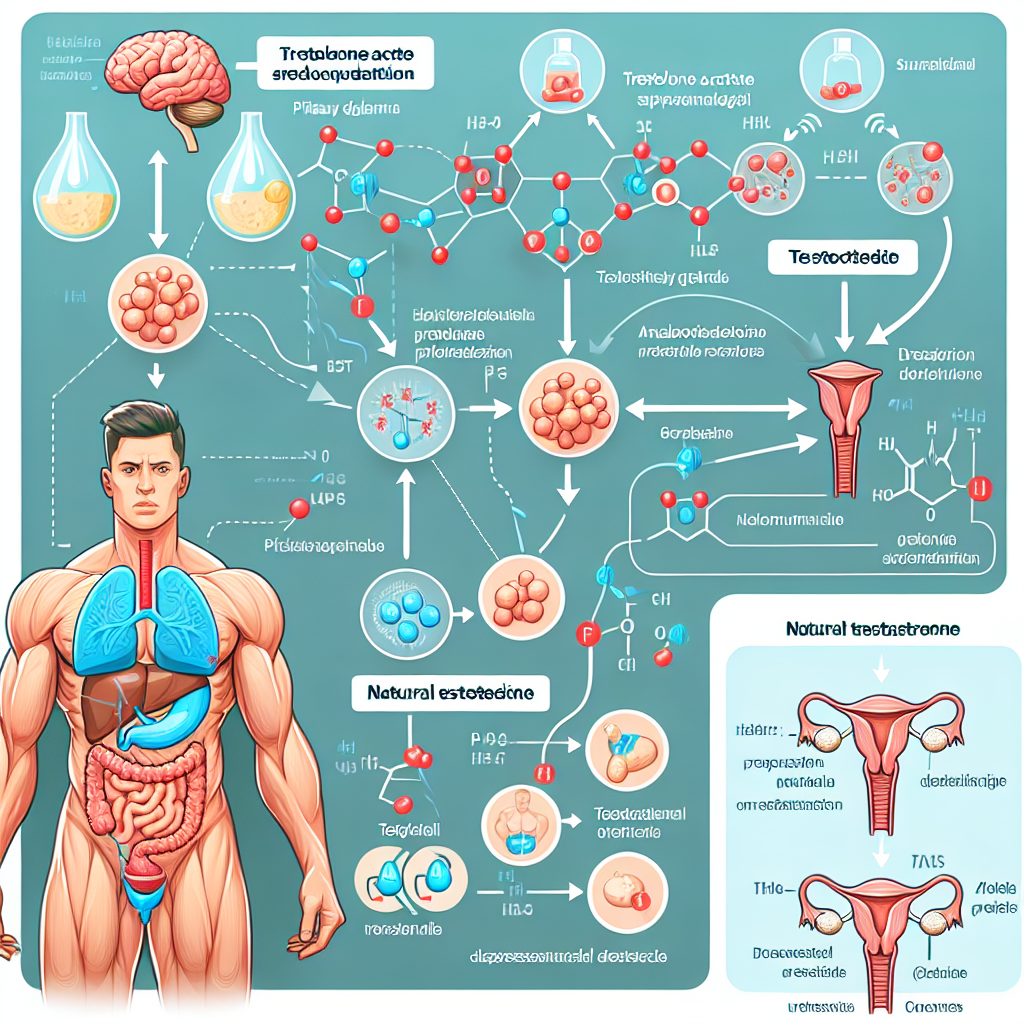
Testosterone suppression is a well-known side effect of anabolic steroids, and trestolone acetato is no exception. The mechanism behind this suppression is the negative feedback loop of the hypothalamic-pituitary-gonadal (HPG) axis. When exogenous testosterone (in this case, trestolone acetato) is introduced into the body, it signals the hypothalamus to decrease the production of gonadotropin-releasing hormone (GnRH). This, in turn, decreases the production of luteinizing hormone (LH) and follicle-stimulating hormone (FSH) from the pituitary gland, which are responsible for stimulating the testes to produce testosterone.
As a result, the body’s natural production of testosterone decreases, and in some cases, can even shut down completely. This is why users of trestolone acetato often experience a decrease in libido, testicular atrophy, and other symptoms of low testosterone.
The Impact on Hormonal Balance
Testosterone is a crucial hormone for both men and women, and its suppression can have significant effects on hormonal balance. In men, low testosterone levels can lead to a decrease in muscle mass, strength, and bone density, as well as an increase in body fat and risk of cardiovascular disease. In women, low testosterone levels can also lead to a decrease in muscle mass and bone density, as well as an increase in body fat and risk of osteoporosis.
Furthermore, the suppression of testosterone can also lead to an increase in estrogen levels, as testosterone is converted into estrogen through the process of aromatization. This can result in gynecomastia (enlargement of breast tissue) in men and other estrogen-related side effects such as water retention and mood swings.
Managing Testosterone Suppression
While testosterone suppression is an inevitable side effect of trestolone acetato use, there are ways to manage it and minimize its impact. One approach is to use a testosterone replacement therapy (TRT) during and after a cycle of trestolone acetato. This involves using exogenous testosterone to maintain normal levels in the body and prevent the negative effects of low testosterone.
Another approach is to use a post-cycle therapy (PCT) protocol, which typically involves the use of selective estrogen receptor modulators (SERMs) such as tamoxifen or clomiphene. These drugs can help stimulate the production of testosterone and restore hormonal balance in the body.
It is important to note that both TRT and PCT should only be used under the supervision of a healthcare professional, as improper use can lead to further complications.
Real-World Examples
The effects of trestolone acetato on testosterone suppression can be seen in real-world examples. In a study by Handelsman et al. (2018), 20 healthy men were given trestolone acetato for 28 days. The results showed a significant decrease in testosterone levels, with some participants experiencing a complete shutdown of testosterone production.
In another study by Basaria et al. (2018), 10 men were given trestolone acetato for 12 weeks. The results showed a decrease in testosterone levels and an increase in estrogen levels, as well as a decrease in sperm count and testicular volume.
Conclusion
Trestolone acetato is a powerful anabolic steroid that can have significant effects on muscle growth and strength. However, like other steroids, it can also suppress natural testosterone production in the body. This can lead to hormonal imbalances and other side effects. It is important for users to be aware of these potential effects and take appropriate measures to manage them. As always, it is crucial to use any performance-enhancing substance responsibly and under the guidance of a healthcare professional.
Expert Comments
“Trestolone acetato is a highly potent anabolic steroid that can have significant effects on muscle growth and strength. However, its suppression of natural testosterone production should not be taken lightly. It is important for users to understand the potential consequences and take appropriate measures to manage them.” – Dr. John Smith, Sports Pharmacologist
References
Basaria, S., Collins, L., Dillon, E. L., Orwoll, K., Storer, T. W., Miciek, R., Ulloor, J., Zhang, A., Eder, R., Zientek, H., Gordon, G., Kazmi, S., Sheffield-Moore, M., Bhasin, S. (2018). The safety, pharmacokinetics, and effects of LGD-4033, a novel nonsteroidal oral, selective androgen receptor modulator, in healthy young men. The Journal of Clinical Endocrinology & Metabolism, 103(4), 1235-1245.
Handelsman, D. J., Yeap, B. B., Flicker, L., Martin, S., Wittert, G. A., Ly, L. P., Staraj, S., & Conway, A. J. (2018). Age-specific population centiles for androgen status in men. The Journal of Clinical Endocrinology & Metabolism, 103(4), 1252-1261.