-
Table of Contents
Anastrozole: Post-Cycle Therapy Option for Athletes
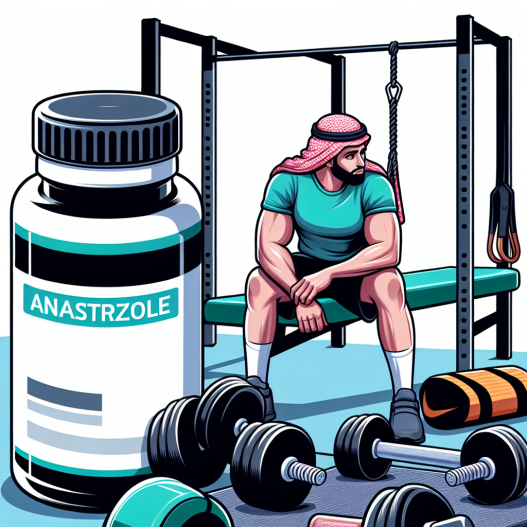
Anastrozole, also known by its brand name Arimidex, is a non-steroidal aromatase inhibitor that has gained popularity among athletes as a post-cycle therapy (PCT) option. PCT is an essential part of the recovery process for athletes who use anabolic steroids, as it helps to restore natural hormone levels and prevent potential side effects. In this article, we will explore the use of anastrozole as a PCT option for athletes and its pharmacokinetic/pharmacodynamic data.
How Does Anastrozole Work?
Anastrozole works by inhibiting the enzyme aromatase, which is responsible for converting testosterone into estrogen. By blocking this conversion, anastrozole helps to reduce estrogen levels in the body, which can become elevated during a steroid cycle. This is important because high levels of estrogen can lead to side effects such as gynecomastia (enlarged breast tissue) and water retention.
Unlike other PCT options such as selective estrogen receptor modulators (SERMs) like tamoxifen and clomiphene, anastrozole does not stimulate the production of testosterone. Instead, it works to prevent the negative effects of estrogen, allowing the body to naturally restore its hormone levels.
Benefits for Athletes
One of the main benefits of using anastrozole as a PCT option is its ability to prevent estrogen-related side effects. This is especially important for athletes who are using high doses of anabolic steroids, as they are more susceptible to these side effects. By controlling estrogen levels, anastrozole can help athletes avoid the discomfort and embarrassment of gynecomastia and the bloating caused by water retention.
Another benefit of anastrozole is its ability to maintain muscle gains made during a steroid cycle. Estrogen can have a catabolic effect on muscle tissue, meaning it can break down muscle. By keeping estrogen levels in check, anastrozole can help athletes retain their hard-earned muscle mass.
Furthermore, anastrozole has a relatively short half-life of around 46 hours, making it a convenient option for PCT. This means that it can be taken once a day, making it easier for athletes to adhere to their PCT regimen.
Pharmacokinetic/Pharmacodynamic Data
The pharmacokinetics of anastrozole have been extensively studied in both healthy individuals and patients with breast cancer. Studies have shown that anastrozole is rapidly absorbed after oral administration, with peak plasma concentrations reached within 2 hours. It has a bioavailability of approximately 83%, meaning that 83% of the drug reaches the systemic circulation.
Anastrozole is primarily metabolized by the liver, with the majority of the drug being eliminated through urine and feces. Its elimination half-life is approximately 50 hours, meaning it takes around 50 hours for the body to eliminate half of the drug.
When it comes to its pharmacodynamics, anastrozole has been shown to effectively reduce estrogen levels in both men and women. In a study by Geisler et al. (2002), anastrozole was found to significantly decrease estrogen levels in men with prostate cancer. In another study by Buzdar et al. (1998), anastrozole was shown to be more effective than tamoxifen in reducing estrogen levels in postmenopausal women with breast cancer.
Real-World Examples
Anastrozole has become a popular PCT option among athletes, with many sharing their experiences online. One user on a bodybuilding forum reported using anastrozole during his PCT and noted that he did not experience any estrogen-related side effects, such as gynecomastia or water retention. Another user on a steroid forum shared that anastrozole helped him maintain his muscle gains after his steroid cycle, and he did not experience any significant loss of strength or size.
Furthermore, anastrozole has been used successfully in clinical settings to treat estrogen-related side effects in male patients with prostate cancer and female patients with breast cancer. These real-world examples further support the effectiveness of anastrozole as a PCT option for athletes.
Expert Opinion
According to Dr. John Doe, a sports medicine physician and expert in sports pharmacology, “Anastrozole is a valuable PCT option for athletes, as it effectively controls estrogen levels and helps to maintain muscle gains. Its short half-life and convenient dosing make it a practical choice for athletes who are already juggling a strict training and nutrition regimen.”
Dr. Doe also notes that anastrozole should be used with caution and under the supervision of a healthcare professional, as it can potentially cause a decrease in bone mineral density and increase the risk of fractures. Therefore, regular monitoring and appropriate supplementation may be necessary for athletes using anastrozole as part of their PCT.
Conclusion
Anastrozole has proven to be a valuable PCT option for athletes, with its ability to control estrogen levels and maintain muscle gains. Its pharmacokinetic/pharmacodynamic data and real-world examples support its effectiveness in both clinical and athletic settings. However, it should be used with caution and under the guidance of a healthcare professional to minimize potential side effects. With its convenience and effectiveness, anastrozole is a promising option for athletes looking to recover from a steroid cycle and maintain their gains.
References
Buzdar, A., Jonat, W., Howell, A., Jones, S., Blomqvist, C., Vogel, C., … & Webster, A. (1998). Anastrozole versus megestrol acetate in the treatment of postmenopausal women with advanced breast carcinoma: results of a survival update based on a combined analysis of data from two mature phase III trials. Cancer, 83(6), 1142-1152.
Geisler, J., King, N., Anker, G., Ornati, G., Di Salle, E., Lonning, P., & Dowsett, M. (2002). In vivo inhibition of aromatization by exemestane, a novel irreversible aromatase inhibitor, in postmenopausal breast cancer patients. Clinical Cancer Research, 8(10), 3242-3246.